
Above-ground pumps
Jet Pump Repair in Northeast Georgia
A jet pump sits up in the well house or crawlspace and pulls water toward it rather than pushing it from below. It is a simple, reachable machine, and when one fails it has usually lost its prime or something on the suction side has given way.
- Shallow and deep-well jets
- Bored and dug wells
- Priming and foot valve work
- Freeze damage repairs
What is the jet pump doing?
Where jet pumps still earn their keep
Jet Pumps on Older and Shallower Georgia Wells
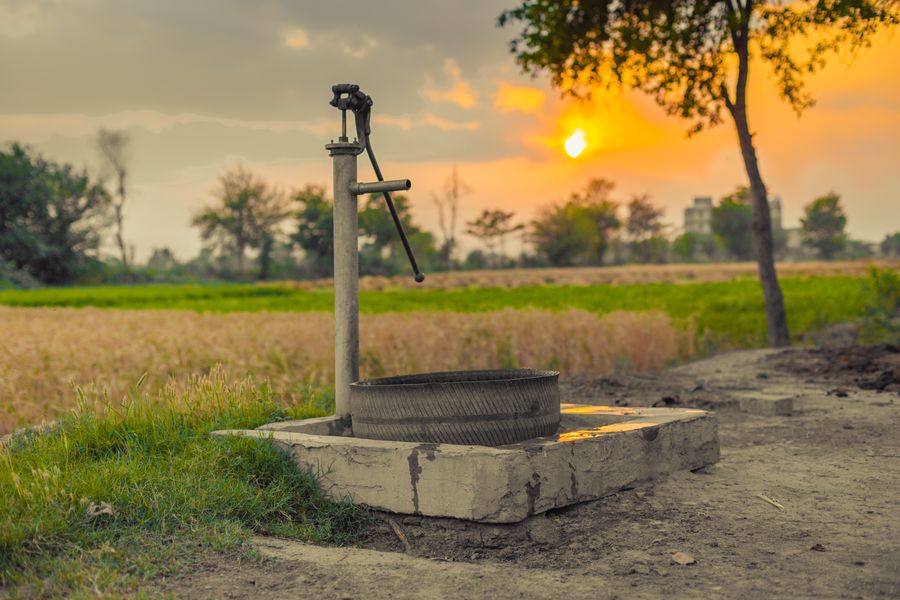
Drive the back roads of Madison, Franklin or Banks County and you will pass plenty of farmhouses still served by bored wells: wide, fairly shallow shafts lined with concrete tile, where the water sits close enough to the surface for a pump on dry ground to reach it. Those are jet pump country.
Where the water is deeper, a two-pipe deep-well jet sends a stream back down to an ejector that boosts the lift. Many homes have since moved to submersibles, but a great many jets are still working, and a well-maintained one is a perfectly sound way to supply a house. They just need a different kind of attention.
SHALLOW WELL
Single-Pipe Jets
One suction line down to a foot valve. Ideal where the water level stays within about twenty-five feet of the pump.
DEEP WELL
Two-Pipe Ejector Systems
A drive pipe and a suction pipe working together with an ejector down the well to reach water further below.
CONVERTIBLE
One Pump, Two Setups
Convertible jets switch between shallow and deep configurations, which matters when a well level has dropped over the years.
Jet pump repairs
What Usually Goes Wrong With a Jet Pump
Because the whole machine sits within arm’s reach, most of these are repaired in a single visit.
Cold snaps
Keeping a Jet Pump Safe Through a Georgia Winter
Hard freezes are not frequent this far south, which is exactly why they catch people out. A single night in the teens can split an exposed pump. Four simple defences.
Seal the Well House
Gaps around doors and pipe entries let freezing wind straight onto the pump. Closing them up makes a bigger difference than most people expect.
Add a Small, Safe Heat Source
A thermostatically controlled heater rated for damp spaces keeps the pump above freezing without cooking it. Avoid improvised lamps near anything flammable.
Drain It When the House Sits Empty
For cabins and seasonal homes, switching off and draining the pump body before winter removes the risk entirely.
Wrap Any Exposed Suction Pipe
The short run between the well cap and the pump is often the first thing to freeze. Foam insulation costs very little and protects it well.
General price bands
Jet Pump Repair Cost
No rig, no deep pull, so jet pump work generally costs less than submersible work. Your exact price is confirmed on site before we start.
Related services
Other Jobs Jet Pump Owners Call About
Older jet systems often still run galvanised tanks that need air added by hand.
If your well has been converted, or you are thinking about it.
When a cracked housing or a burnt motor makes a new pump the better buy.
Jet pump questions
Questions Jet Pump Owners Ask Us
Should I Switch From a Jet Pump to a Submersible?
Not necessarily. On a shallow bored well with a healthy water level, a jet pump is easy to service and cheap to replace. A submersible makes more sense when the water level has dropped beyond what the jet can reach, when the pump is constantly losing prime on a long suction run, or when noise in the house is a problem.
How Can I Tell a Shallow-Well Jet From a Deep-Well Jet?
Look at the pipes leaving the pump toward the well. A single pipe usually means a shallow-well setup. Two pipes running down into the well mean a deep-well jet with an ejector below. If you are unsure, a photo of the pump and its connections is enough for us to tell.
Why Has My Jet Pump Become So Noisy?
A rising whine or grinding often means worn motor bearings. A rattle or gravel-like noise while running can be cavitation, where the pump is starved of water and drawing air. Both deserve a look before they become a failure, and both are easier to fix while the pump still runs.
Can a Jet Pump Work on a Drilled Well?
Yes, with a deep-well setup, provided the water level is within the range the ejector can lift. Many drilled wells in the foothills are simply too deep for that, which is why submersibles are the norm up there.
Short on time?
Describe Your Jet Pump Problem
Mention whether the pump sits in a well house, crawlspace or basement, and whether it has needed priming lately.
Jet Pump Lost Its Prime Again?
Repeated priming means a leak somewhere. We find it so you can stop topping the pump up.