
Switches and control boxes
Pressure Switch and Control Box Repair
The pressure switch decides when your pump runs, and the control box gets a three-wire submersible spinning. Both sit above ground, both cost little next to a pump, and between them they account for a large share of no-water calls across Northeast Georgia.
- Switch contacts and settings
- Start capacitors and relays
- Low-pressure cutoff switches
- Fire ant damage cleared
What is happening at the switch?
Above-ground electrics
The Two Small Boxes That Run Your Pump
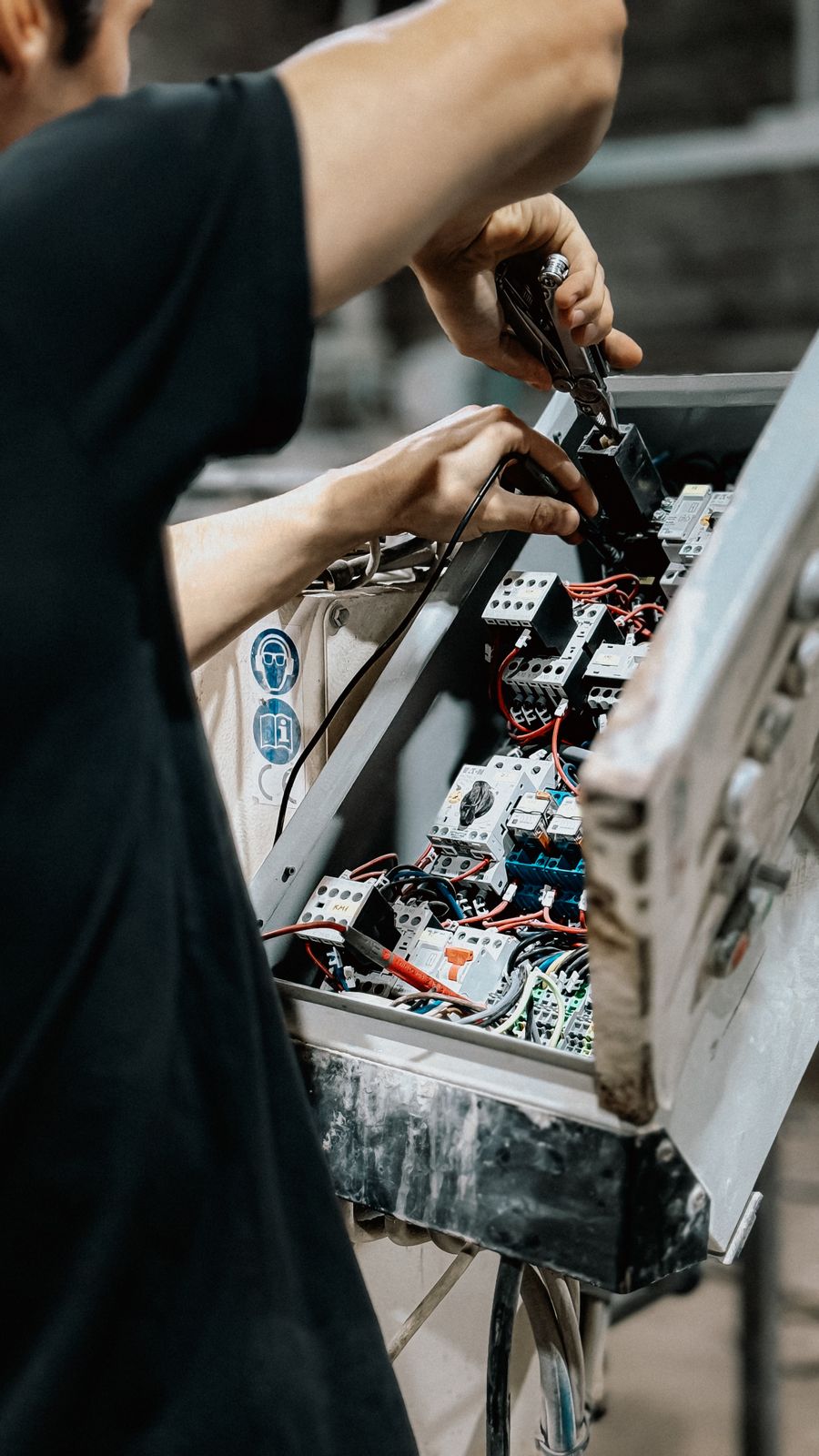
The pressure switch is a spring-loaded diaphragm wired to a pair of heavy contacts. When household pressure falls to its lower setting, the contacts snap together and the pump starts; when pressure climbs to the upper setting, they spring apart. Those contacts carry the full pump load at 240 volts and spark a little every single cycle, which is why they wear.
The control box is only found on three-wire submersibles. Inside sit the start capacitor, often a run capacitor, a relay that drops the start circuit out once the motor is up to speed, and an overload to protect it. Two-wire pumps carry those parts down the well instead. Either way, these are the components we test first, because they are quick to check and cheap to put right.
SETTINGS
Cut-In and Cut-Off
Two nuts on two springs set where the pump starts and stops. They should be matched to the tank charge and to what the pump can actually reach.
CONTACTS
Where the Wear Happens
Small arcs every cycle slowly pit and blacken the points until they stop closing cleanly. Short cycling speeds that up enormously.
CONTROL BOX
Getting the Motor Turning
Capacitors give the motor its starting kick. When one fails, the motor hums against the load and overheats instead of spinning.
Electrical repairs
Switch and Control Box Faults We Fix
Each of these is confirmed with a meter before a part is changed, so you are never paying for a hopeful swap.
Stay safe
What Homeowners Should and Should Not Do
Plenty of advice online suggests tapping or prying a stuck switch. Inside that cover is live 240-volt wiring. Here is what is genuinely useful, and what is best left alone.
Do Note the Start and Stop Pressures
Watch the gauge as the pump kicks on and as it shuts off. Those two numbers help us more than any description.
Do Check the Breaker Panel
Look for a tripped double-pole breaker labelled for the well. If it trips again straight away, leave it off and call.
Do Not Tap or Pry the Contacts
Knocking a switch can get water flowing for a day, but it means reaching near live terminals, and it hides a part that is already failing.
Do Not Crank the Settings Higher
Raising the cut-off beyond what the pump can reach leaves it running endlessly. Better pressure comes from a correctly matched system, not a tighter spring.
Ballpark figures
Pressure Switch Replacement and Control Box Repair Cost
Electrical work sits at the low end of well repair costs because nothing has to come out of the ground.
Related services
Often Checked in the Same Visit
A flat tank is the most common reason switch contacts wear out early.
If the house has no water at all and you need someone today.
When the electrics check out and the fault is further down the well.
Switch and control box questions
Pressure Switch and Control Box FAQs
What Pressure Should My Well Switch Be Set To?
Most homes run happily at 30/50 or 40/60, meaning the pump starts at the lower figure and stops at the higher. The right choice depends on what the pump can deliver at your well depth and on the tank pre-charge, which should sit just under the start pressure. Changing one without the other causes problems.
What Is the Lever on the Side of My Pressure Switch?
That is a low-pressure cutoff. If pressure drops very low, it switches the pump off to stop it running dry. Lifting the lever restarts it. Doing that once after a power cut is fine. If you find yourself lifting it often, something is wrong: a weak well, a leak, or a pump that is losing its ability to build pressure.
Can a Faulty Control Box Damage the Pump?
Yes. A relay stuck in the start position, or a capacitor of the wrong rating, makes the motor run hot every time it starts. Over months that cooks the windings. It is one reason we never fit a random capacitor just because it physically fits the box.
How Do I Keep Fire Ants Out of the Well Switch?
Keep the switch cover fully closed and seated, seal gaps where wires enter, and treat around the well house as part of your regular yard care. Some switches are made with sealed or insect-resistant housings, which are worth considering on properties where ants have caused trouble before.
Hear something odd?
Tell Us What You Hear at the Switch
A click, a hum, a buzz or total silence. Each points somewhere different, so it is worth including.
Pump Stuck On or Stuck Off?
Switch and control box faults are usually sorted in a single visit, with the parts already on the truck.